The following article by Aríel Pétursson, chairman of the Seamen's Council, appeared in Morgunblaðin today:
Are older people the resource of money?
The issue of aging and all the various services provided by companies, institutions, non-profit organizations and non-profit organizations surely have all the means to be a profitable business where you could make money. But like the national school system, law enforcement and other important infrastructure that create our society, the aging service is also a fundamental pillar of social infrastructure and should therefore be subject to the laws of non-profit-driven operations, as is the case for example with the Capital Region Seamen's Council, which owns the Hrafnist homes and of course more operators.
The owners and operators of nursing homes are of three types: the public sector (the state and local authorities), profit-driven private parties with an agreement with the public sector on both housing rent and the payment of daily fees, and finally non-profit private parties and non-profit organizations with an agreement with the public sector; sometimes called the third sector.
The Seamen's Day Council, which owns and operates the Hrafnist homes and the apartment rental company Naustavör is a non-profit private company, where no dividend is ever paid to the owners The Seamen's Day Council, together with its subsidiary Naustavör with its 350 rental apartments, has been in successful operation for 67 years without taking so much as one kroner out of the operation to pay the owners. All surplus money, when it happens, has been spent from the beginning on the maintenance of real estate, improved services and, depending on the circumstances, on further development. Those behind the Seamen's Council do so with two things in mind: from the ideal of making a good impression of making a future living for themselves, as we ourselves will be elderly if we have the same story to tell about the backers, for example Grundar, who has worked for more than 10 years.
Now, fortunately, changes are planned to the arrangement for the financing of real estate for nursing homes that have been under the control of the state and municipalities for many years. The current arrangement has resulted in the slow development of new spaces and when they have been built, they have often been expensive. An example of this is twice the price per square meter during the construction of a new nursing home in Selfoss than at Sléttuveg in Fossvogur, but the later mentioned project was carried out under the direction of the Seamen's Council, from comprehensive design to the dedication of the home when residents moved in. The new arrangement will enable independent parties to put their hands up their sleeves and build new nursing spaces in line with increased demand and increase in the oldest group of Icelanders. Initial preparations have already begun for such a project on the grounds of Hrafnista in Hafnarfjörður.
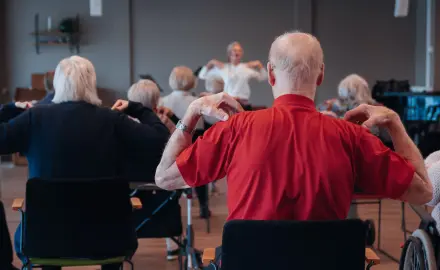
The City of Reykjavík has recently entered into a partnership with several private profit-driven real estate companies for the development of „quality of life“ centers in selected locations in the city The associations have presented original ideas about how they envision such projects. The word quality of life essence is all surrounding. The word buzzword seems to be based on the development of quality of life centers. It is a term that the Seamen's Council originally defined as a philosophy that has actually been followed for decades by Hrafnista. It was first defined at a meeting of Naustavar's employees in 2020 that lacked a good term for the great society that was building up on our behalf at Sléttuveg in Fossvogur. It is a community of those who live independently in apartments that are tailor-tailored to the needs of older people where they are inside a service center with a large supply of social activities, this whole range of entertainment and the same quality of food, all of food sales.
It is quite recent that profit-driven real estate companies that pay dividends to owners plan to make conquests in the field of aging services by entering into long-term contracts with the state to rent housing options for the activities of nursing homes. Of course, it is perfectly normal for private parties to build or change and rent real estate for individuals and companies, but in the specialized housing of a nursing home, and mainly since the state is an intermediary for housing options, the individual who lives there has little to say about his lot and the facilities and services available there. Therefore, it is important to walk slowly through happy doors when builders present ideas about quality of life essence because they are not just some housing option but a set of many inevitable and important service items that make up the only true quality of life. That's why I am wary that prospective developers support the definition of quality of life, which in my mind is more than just a roof over their heads.